An award-winning SMS marketing platform sought to scale its customer acquisition and retention engines. Starting with a two-rep sales team, the goal was to build a complete customer-journey engine that converts and retains users efficiently.
The Solution
We deployed an integrated approach: dedicated SDRs for user onboarding, email campaigns for nurturing, and customer support for retention. Customized operational workflows and real-time reporting improved conversion visibility and performance.
The Results
• 4,454 new customers closed • 37% conversion rate from inbound lead to deal • Growth from 2 to 14 sales and success staff
In this case study, iQor and a Fortune 500 energy company partner in a transformative strategic outsourcing relationship. This story builds on the energy provider’s global success with iQor throughout our 15+ year relationship. Discover how our CX operational expertise achieved $14 million in annualized savings for our energy client by reading the first case study here.
In this update, we share the next chapter: unmatched speed to proficiency for contact center agent training, sustainable record-low attrition compared to energy industry trends, and CX innovations that unlock operational excellence for our energy client.
The high volume, high demand services our energy client provides to millions of customers initially led them to consider outsourcing. They required a BPO partner that could meet their high standards for customer service quality, operational excellence, and compliance.
The energy provider selected iQor over recognized leaders in the Everest CXM PEAK Matrix. iQor’s culture of employee satisfaction differentiates us from other outsourcing vendors, positioning us as a strategic partner with a motivated, multilingual talent pool equipped to navigate personalized customer interactions and compliance requirements.
Investing in employee satisfaction is a long-standing core value in our business. Our dedicated client teams build successful programs that deliver best-in-class customer experience through strategic investments in our on-site and work-at-home agents. We proudly achieve exceptional 70% employee net promoter scores—40% above industry norm—across the energy provider program’s service locations, underscoring our commitment to superior customer service delivery that supports the client’s business growth.
iQor’s Strategic Transformation Blueprint for Energy Customer Service Delivery
Since the program’s launch, iQor’s BPO solutions have exceeded expectations, with strong gains in customer satisfaction, quality assurance, first call resolution, average handle time, client utility, and transaction satisfaction. Here’s what sets us apart:
1. iQor specializes in harnessing strategic, data-driven insights for optimal resource allocation, blending human expertise with CX automation.
3. iQor’s diverse global footprint provides access to highly skilled talent whose satisfaction we maximize through award-winning training and career development processes.
Read on to discover the innovative strategic outsourcing solutions that have secured our client’s trust and satisfaction through millions in cost savings, making us their only BPO across their comprehensive CX operation and positioning us to support their future growth.
Success Snapshot
Unstoppable Performance
Seamless site launches.
Holistic process management.
CX automation insights.
Trusted regulatory compliance.
Scalable service excellence.
Irresistible Outcomes
3% agent attrition.
70% eNPS.
Higher year-over-year KPIs.
90%+ CSAT and FCR.
$14 million cost savings in Year One.
Background
The energy provider’s sizable customer base requires high-touch support for the critical energy services our client provides. They place a high value on specialized customer service support that efficiently accommodates their energy consumer needs.
Due to the complexities of energy bills and the vital role energy plays in daily life, customers of energy companies often require a high-touch approach to customer service, which requires skilled, empathetic customer service teams who consistently deliver excellent customer engagement.
iQor customer service agents are trained to deliver personalized interactions and ensure energy customers understand the details of their accounts, make informed decisions, and receive prompt assistance during outages or service issues. Ultimately, high-touch customer service fosters positive experiences that can lead to increased customer satisfaction and loyalty for energy providers.
How the BPO Partnership Evolved to Meet Growing Energy Customer Service Needs
Initially, the client sought non-voice back office support services to enable efficiency in their growing business. After conducting a rigorous evaluation process, they selected iQor as their BPO partner over several recognized Leaders in the Everest CXM PEAK Matrix for both voice and non-voice customer service.
iQor’s commitment to employee satisfaction and operational efficiency presented a unique value proposition for the energy provider to improve their CX operation. As our performance continued to exceed the energy provider’s expectations, they added additional lines of business to our portfolio of services delivered:
Beyond the expanded service offerings, iQor supports the energy provider in a consultative role, providing insights designed to transform and optimize every level of their customer service delivery model.
Decades of Energy Domain Experience Inform iQor’s Performance-Driven Approach to Optimizing CX Operations
iQor’s proven experience in the energy industry played a crucial role in securing this partnership. Our CX experts are deeply embedded in the evolving regulatory landscape for energy companies, ensuring our solutions sustain our client’s commitment to compliance.
iQor’s employee development practices accelerate agent proficiency across multiple geographies, ensuring reliable customer service regardless of location. This is reflected in our consistent achievement of the energy provider’s performance targets, including customer satisfaction, resolution rates, and more.
iQor has become an integral part of the energy provider’s customer service ecosystem, earning their strong praise for the unmatched quality of our call center operations.
Business Opportunities
The energy provider’s rapid growth created a need for specialized CX staffing support. They turned to iQor for outsourced customer service agents empowered by optimized recruitment and retention strategies and trained to achieve high performance benchmarks.
BPO Partnership Delivers Integral Energy Compliance Standards
Regulations and labor agreements add specific parameters to our energy client’s pursuit of nearshore and offshore customer service locations. Rigorous regulation and security requirements contributed to the energy provider’s diligence in selecting the best-fit BPO candidate with the capabilities needed to deliver the support they need.
Safety-First Processes Build Customer Trust With Every Interaction
iQor prioritizes safety in every interaction for the energy provider. Understanding the inherent risks within the energy sector, our comprehensive training equips agents to identify and address potential safety concerns. This includes recognizing signs of gas leaks, electrical hazards, and other urgent risks observed from customer descriptions.
Furthermore, time-sensitive protocols are in place to ensure prompt response during power outages or emergencies. Clear communication and thorough skills assessment are high priorities in our training and compliance standards to ensure the well-being of both customers and employees throughout every service interaction.
Connecting Energy Customers to Assistance Programs That Alleviate Hardship
iQor also partners with the energy provider to connect customers facing financial hardship with vital assistance programs, a key requirement for energy customer service compliance.
Experienced iQor agents help customers navigate the assistance qualification process with empathy and efficiency. By asking clear, supportive questions and considering their feedback, our agents can identify programs that alleviate financial burden and ensure customers stay on track with their energy bills.
iQor’s commitment to compliance is underscored by our zero trust cybersecurity approach that ensures world-class protection of sensitive energy customer information. Our protocols ensure every user and device requesting access to privileged information undergoes thorough authentication and authorization checks, protecting our client’s reputation and the data privacy of their end customers.
Solution
The energy company partnered with iQor to craft a strategy that would produce exceptional employee and customer experiences along with significant financial savings. The teams worked closely to transition much of the energy company’s support to nearshore and offshore locations that met their support criteria.
The energy provider is committed to deploying an agent workforce with a high degree of employee satisfaction in a supportive work environment. iQor’s comprehensive active-learning training and development frameworks position us as the ideal outsourcing partner to support our client’s initiative for achieving highly engaged, high-performing teams.
Our client entrusted iQor’s CX experts to elevate employee satisfaction, automate workflows, and comprehensively optimize their CX operation. Our new program implementation and operations teams collaborated to:
Accelerate speed to proficiency.
Optimize employee satisfaction.
Identify automation opportunities.
Deliver multilingual customer service.
Optimize communication channels across all sites.
Here’s how we achieved the energy provider’s goals:
1. Award-Winning Active Learning Training Boosts Speed to Proficiency for Energy Customer Service Agents
iQor’s award-winning training programs utilize active learning techniques to accelerate speed to proficiency, ensuring agents are fully equipped to handle the energy industry’s specific requirements.
iQor’s iLead Next Level Career Coaching program has been recognized with the Bronze Stevie® Award for 2024 and 2023. This highlights iQor’s dedication to a workplace culture that thrives on active engagement, effective support and coaching methods, and high employee satisfaction.
2. Machine Learning-Powered Coaching and Development for Improved Employee Retention
iQor prioritizes agent well-being and career growth opportunities. We leverage multiple channels to gauge employee satisfaction, including regular surveys and a proprietary check-in process. By analyzing feedback and exit interviews, we’ve streamlined our ESAT tools to capture valuable insights to inform retention strategies.
iQor’s data scientists harness the power of machine learning, building an AI large language model (LLM) that can accurately predict when agents are at risk of attrition. By analyzing historical data on multiple data points including performance, work characteristics, and employee satisfaction, the model identifies agents at risk of leaving. This allows for targeted interventions like coaching, career development, or workload adjustments. This model is continuously refined with fresh data, ensuring its effectiveness in optimizing agent retention and reducing turnover.
Our holistic approach to employee satisfaction informs targeted coaching and development opportunities. Additionally, we track coaching interventions to ensure they’re having a positive impact. This proactive approach empowers us to identify potential risks of attrition and implement retention strategies, fostering a loyal and engaged workforce.
Streamlined Recruitment and Onboarding Harnesses AI to Maximize Contact Center Employee Experience
Meeting the client’s high volume seasonal ramp demands for skilled agents requires a strategic approach. That’s why we leverage iQor’s Symphony [AI]TM ecosystem to identify and attract top talent with the specific skills needed. We then streamline the recruitment and onboarding process to excel in the energy sector’s customer service environment.
3. Intelligent Workflow Automation Strategies Amplify Specialized Energy Customer Interactions
iQor identified an opportunity to streamline call center processes in the back office by automating certain manual tasks such as acknowledgements, data entry, and status updates, reducing the average handle time and improving resolution rates.
iQor proactively identifies opportunities for our client to leverage smart automation across their CX operation. This empowers efficient management of repetitive tasks and provides real-time guidance to customer service agents. Our strategic recommendations enable agents to focus their talents on resolving complex customer interactions and building stronger relationships.
4. Effective Multilingual Customer Service Delivery Fosters Cultural Affinity With Diverse US Customer Base
iQor’s strategic placement in nearshore and offshore locations empowers the energy provider to deliver exceptional multilingual customer service across the U.S. This geographically diverse workforce allows them to tap into a talent pool with native fluency in languages spoken by a significant portion of the American population.
By strategically matching agents with customers based on language and cultural background, iQor fosters a sense of cultural affinity during interactions. This ensures clear communication while building trust and rapport with customers, leading to a more positive customer experience. This personalized approach strengthens the connection between the energy provider and its diverse customer base.
5. BPO Leadership Consolidates Energy Provider’s Global Contact Center Communication Channels
iQor’s senior leadership delivered a seamless transition for the energy provider by establishing a single point of contact for global operations. Consolidating the communication channels ensured full transparency, keeping our client informed and engaged about the program’s progress across all locations every step of the way.
By streamlining communication, iQor’s team highlighted our commitment to ease-of-doing-business, a hallmark of the iQor experience. Our approach exceeded the energy provider’s expectations for a first-time outsourcing experience nearshore and offshore, creating smiles for their large base of satisfied customers.
The program continues to evolve, with iQor and the client working collaboratively to develop agile, proactive CX solutions that ensure long term success. This dedication to continuous improvement—one of our iQorian Values—is key to sustaining the client’s trust in iQor’s outsourced services and paves the way for an even stronger partnership in the future.
Results
Achieved agent attrition in the 3% range across all locations.
Achieved 70% employee net promoter scores (eNPS).
Optimized the employee experience for higher satisfaction and tenure.
Introduced new AI, automation, and analytics tools that streamline processes.
Managed 100% of the client’s inbound email with excellent outcomes.
Set and achieved aggressive timeline for achieving ramps and speed to proficiency.
Met or exceeded critical key performance indicator (KPI) targets since program launch with year-over-year (YoY) improvements:
a. 93% customer satisfaction (CSAT), a +5.5% year over year increase.
b. 92% first call resolution (FCR), a +7% year over year increase.
c. +4% quality assurance (QA) year over year.
d. +20.3% improved average handle time (AHT) for voice.
e. +6.5% improved average handle time (AHT) for email.
f. +3.2% gain in client utility & transaction satisfaction.
Sustained cost savings, including $14 million in Year One.
A Strong Foundation for Future Energy Success Through CX Operational Excellence
iQor’s 15+ year relationship with the energy provider positioned us as a trusted advisor, leading to a strategic transformation of their customer experience model that has resulted in unwavering achievements for nearly three years. In the dynamic energy sector, our agility ensures we adapt to our client’s evolving business needs with a CX framework customized to the needs of the business and the industry.
iQor’s partnership approach transcends traditional outsourcing. We empower our energy partners for success by delivering proactive advice and recommendations, setting ourselves apart as a full-service provider of CX business solutions. The result is best-in-class operational excellence, continuously optimized to fuel ongoing growth.
A prominent auto finance company, as a subsidiary of a well-established financial services corporation, ranks among the top auto lenders in the nation. It offers innovative, technology-driven solutions that simplify loan applications and account management, providing competitive rates and robust customer support. With strategic partnerships across numerous dealerships, it delivers exclusive financing deals, enhancing its market position. The company’s commitment to excellence and customer satisfaction has earned it numerous accolades and a strong industry reputation.
For over 15 years, iQor has been the trusted partner of this leading U.S.-based automotive finance organization, working together to streamline customer service operations for efficiency and satisfaction. This case study explores the key factors that have solidified iQor’s position as our client’s preferred BPO for CX process management, a role that directly integrates iQor’s CX experts into their internal teams.
Strategic Outsourcing With iQor for Auto Finance Process Optimization
iQor delivers comprehensive back office support and training for the auto lender’s vast customer service network, encompassing both internal and external teams. The auto lender recognized iQor’s dedication to continuous improvement and proactive thought leadership that maximizes the auto finance lender’s business initiatives.
This trust led to an additional strategic outsourcing role for iQor. Based on our extensive track record of success, the auto finance provider requested we serve in a consultative capacity, designing process management strategies to elevate customer feedback tracking and facilitate improvements to loan servicing CX.
Read on to discover how iQor’s deep understanding of our client’s auto finance business, unwavering commitment to performance excellence, and agility in adapting to evolving needs have fueled a successful partnership with an ever-expanding scope.
Success Snapshot
Unstoppable Performance
Unmatched tenure with our client.
Purposeful CX automation insights.
Data-driven strategy & execution.
Auto finance process expertise.
Irresistible Outcomes
34.5% NPS improvement.
7.5% perfection rate increase.
72% error reduction.
Seamless loan workflows.
Read on for the story that led to these exceptional results.
Background
Rapid growth after 2021 led the auto lender to outsource 95% of their entire CX operations to BPO partners like iQor. While efficient, this shift meant less direct access to customer feedback previously gathered by their internal process managers, resulting in service quality requiring realignment with customer sentiment.
Recognizing the importance of delivering irresistible auto loan customer service to borrowers, our client selected iQor to become an integrated member of their internal process management team and execute their high standards for customer-centric care and operational process optimization.
The Unique Advantage of an Outsourced Process Management Partnership for Auto Lenders
Building on our strong 15+ year partnership and deep understanding of the auto finance industry, iQor collaborated closely with the auto lender to develop their requested process management role. The role is designed to seamlessly integrate iQor’s process manager within the auto lender’s team.
By incorporating our program experts into our client’s internal team, we contribute iQor’s decades of accumulated CX process knowledge toward achieving the auto lender’s CX goals. This capability differentiates iQor from traditional managed service providers. Impressed by iQor’s commitment to CX excellence, which mirrors their own high standards, the client has requested our expertise in optimizing their entire customer service operation.
Business Opportunity
Initial success with this consultative role set the stage for a promising future. Given the dozens of business lines outsourced by the auto lender, a well-oiled process manager program had the potential to significantly optimize their processes from a CX standpoint.
This expansion is designed to provide invaluable insights into the diverse needs of each program, ultimately safeguarding our automotive finance client’s customer service quality. By proactively addressing potential inefficiencies and optimizing processes across all outsourced operations, iQor positioned itself as a vital partner in comprehensively improving their CX.
Solution
iQor recognized the unique opportunity presented by the client’s situation. Utilizing our extensive experience managing a significant portion of the auto lender’s outsourced operations, we proposed a strategic solution for process optimization.
iQor’s CX Strategy for Accelerating Auto Loan Net Promoter Scores and Supercharging Lien Holder Rate Improvements
Our plan involved integrating a dedicated iQor process manager within the client’s internal team as a subject matter expert. This pilot program, initially focused on the client’s primary offshore location, aimed to identify program opportunities and pinpoint loan processing and servicing gaps.
iQor consulted with our automotive finance client to identify performance goals, such as driving significant improvements to lien holder rates and setting net promoter scores (NPS) and customer satisfaction (CSAT) on a skyward trajectory.
The program yielded compelling results. Here’s a breakdown of iQor’s contributions.
Streamlining Auto Loan Servicing Workflows With iQor’s Automation Expertise
A review of critical processes uncovered over 30 loan servicing workflows where automation can drive continuous improvement and efficiency. iQor’s process manager advised the auto lender on best practices for automation informed by our digital transformation expertise, paving the way for increased agent productivity and happier customers.
Improving Borrower Satisfaction Through Collaboration and Process Optimization
Operating seamlessly alongside the auto lender’s existing process management team, iQor’s process manager played a key role in the pilot’s outcomes. This success ultimately resulted in over a dozen additions to iQor’s process management solutions to support the auto lender’s high-volume needs.
These collaborative efforts between iQor and our client resulted in documented processes, visualized loan servicing workflows, and proposed optimization strategies. All changes were meticulously crafted to adhere to the client’s regulatory requirements, improving CX while maintaining compliance. Specific examples include:
Streamlining the vehicle titling process for agents and customers.
Implementing call analysis that ensures more accurate call routing.
Equipping automotive agents with timely knowledge base updates.
Results
iQor’s initial process management pilot was a resounding success. Our automotive finance customer was pleased with the loan servicing improvements, resulting in the expansion of the program to other business lines.
These achievements increase the auto lender’s confidence in iQor’s ability to achieve their process optimization goals through consistent and sustainable performance excellence. This reflects our commitment to continuous improvement facilitated by open communication, a core value in our iQorian identity and critical for exceptional automotive finance CX.
Key Outcomes of the Strategic Outsourcing Partnership
34.5% NPS improvement.
Customer satisfaction soared, reflected in a dramatic rise in net promoter scores that indicates strong future sales growth.
7.5% perfection rate increase.
The client achieved a significant increase in their receival rate for documents necessary for swift borrower approval.
72% error reduction.
The client benefited from a substantial year to date (YTD) decrease in loan servicing errors since launching the program.
Future Roadmap for Auto Lending CX Process Management
iQor’s footprint with the auto lender has expanded to include seven process managers across various lines of business, with plans for further growth. This expansion reflects the strategic value this program delivers, strengthening our BPO services across the client’s entire CX operation.
iQor’s process manager program facilitated the design of a comprehensive knowledge base, empowering agents with faster and more accurate information access. A unified call flow and specialized routing profile accelerated new hire proficiency across both internal and BPO teams, boosting overall efficiency while exceeding key performance indicators.
These improvements solidify the strength of our longstanding strategic outsourcing partnership with the automotive finance provider. Our customer’s continued trust reflects our proven track record of successfully optimizing customer service operations through high quality standards and effective CX strategies.
This blog post is the first in iQor’s 2-part travel and hospitality CX series.
In this chapter, you’ll discover key analyst insights from McKinsey and Forrester that explain how a trusted BPO partner maximizes travel customer satisfaction through outsourced back office support. Join us now to see why a data-driven approach powered by analytics, AI, and automation equips iQor’s CX specialists to support the world’s best loved travel and hospitality brands.
Want to learn how outsourcing safeguards travel brands and customers, secures lasting trust, and inspires positive social media engagement? Check out “Part 2: Forge Powerful Customer Trust Through Transparent and Secure CX Policies”by clicking here.
Proactive Digital + Human CX Strategies Differentiate Success With Today’s Travelers
What makes a traveler choose your brand again? In the travel and hospitality arena, where comfort and accommodation quality are key, customer experience (CX) is the cornerstone that can make or break customer satisfaction and promote repeat business.
This article zeroes in on the characteristics of exceptional customer experience in the travel sector from the perspective of top business analysts. We explore strategies for online travel agency (OTA), airlines, hotels, cruise lines, and other industry stakeholders to implement best CX practices with support from a customer-centric outsourcing partner like iQor.
According to the World Travel and Tourism Council, travel and tourism are nearing full recovery from pre-pandemic levels. They predict that recovery and growth are likely to continue, with travel and tourism GDP outpacing the overall economy at an average of 5.8% per year between 2022 and 2032.
This promising outlook explains why tourism businesses are more energized than ever about developing an effective CX approach. Nevertheless, the sector still faces significant challenges from widespread labor shortages, particularly from customer-facing roles. A sustainable future for tourism hinges on proactive strategies to align customer experience (CX) and satisfaction growth with the same upward trajectory as the industry’s overall current forecast.
While customer-facing interactions may seem like the logical first step, we’re here to prove why back office teams, technology, and processes are equally integral to delivering unforgettable, smile-worthy travel customer experiences.
Key Insights
Analyst insights indicate that effective back office operations achieved in partnership with a trusted BPO play a critical role in optimizing customer satisfaction through streamlined processes and smoother customer journeys.
Hyper-personalization is critical. Historical data analysis, loyalty and reward programs, tailored recommendations, and outreach and promotions are determining factors for optimal offer development through precise customer segmentation.
Continuous investment in analytics, AI, automation, employee training, and secure regulatory practices is vital for optimizing customer experience in the travel and hospitality sector.
Why the Back Office Is the First Step Toward Creating Delighted Travel Customers
Let’s explore some examples from different segments of the travel and hospitality sector. One principal analyst from Forrester notes that turbulence in the airline industry is largely connected to end-user customer experience (CX) management.
A strong digital CX strategy is key to unlocking lasting customer engagement for travel and transportation organizations. By bridging gaps between travelers, employee teams, and brands through CX expertise, airlines and travel companies can enjoy the advantages of streamlined operations and engaged customers.
Another Forrester Research survey reveals that 90% of customers will advocate for hotel brands when their experience makes them feel valued. Hospitality brands—from established full-service hotels and resorts to the booming short- and long-term stay marketplace—encourage positive word of mouth and brand advocacy when they provide enjoyable, relaxing stays for their guests.
The good news? The major analyst groups are only confirming what customers are already telling business leaders loud and clear about how to deliver seamless CX:
One solution could be to build a workforce with the mix of digital and interpersonal skills needed to keep up with travelers’ fast-changing requirements … In McKinsey’s experience, the total service cost of this type of work can make up 10 percent of total operating costs. Most often, these roles are not guest facing. A professional and digital-based solution might become an integrated part of a third-party service for [travel and hospitality businesses] looking to outsource this type of work.
—McKinsey, “The Future of Tourism: Bridging the Labor Gap, Enhancing Customer Experience”
Case Study Snapshot: iQor Expertly Implements Back Office RPA to Streamline US-Based Air Carrier’s Travel CX
For one major U.S.-based air carrier’s customers, the process for redeeming a voucher toward their next adventure was met with long wait times. The air carrier commissioned iQor to implement a robotic process automation (RPA) solution that simplifies the voucher redemption process.
iQor’s solution surpassed the air carrier’s expectations by streamlining internal back office processes and significantly improving by saving over 2.5 months’ worth of wait times in one year for customers on hold.
Automates Repetitive Tasks. The RPA takes care of those back office tasks that, while essential, can bog down the multi-step validation process involving CRM systems, booking platforms, and payment verification. RPA automates these steps, freeing up human agents to focus on complex issues and provide immediate responses.
Reduces Customer Wait Times. By eliminating manual data entry and streamlining processes, wait times dropped by a staggering 29%! This translates to less frustration for travelers and a smoother overall customer journey.
Enables Swift Voucher Access. The RPA ensures relevant customer data and voucher details are captured and stored in a secure digital repository. This allows for immediate access and redemption, empowering customers to book your dream trip with ease.
iQor is transforming the customer experience in the travel industry with our digital support solutions for air carriers. By eliminating disruptions and ensuring rapid responses, RPA empowers travel brands to deliver a seamless journey, from voucher redemption to unforgettable post-trip memories.
Self-service automation and AI support empowers customers with optimized back office CX.
Every moment of travel is integral to the overall journey experience, and travelers place a high value on efficiency. Self-service travel customer support and back office support work together to create a smoother and more satisfying customer experience. Self-service options, like FAQs, knowledge bases, robotic process automation (RPA) and AI chatbots, empower travelers to find answers and resolve simple issues independently.
This seamless collaboration between self-service and back office support empowers travelers with control and fosters a sense of efficiency, ultimately leading to a more positive customer experience.
Enable strategic AI chat capabilities and mitigate irregular operations with back office BPO expertise.
As AI continues to evolve, it rewrites the rule book driving 24/7 real-time customer service for travelers. AI-powered chatbots are designed to optimize disruption management, save time, and increase productivity in customer service in a sector that constantly experiences irregular operations (IROPs).
AI chatbots can act as a bridge between travelers and the back office support team in the travel industry. While AI chatbots can handle basic inquiries and resolve simple issues directly, their true value for back office support lies elsewhere, including:
Initial Screening and Triage. AI chatbots can efficiently screen incoming inquiries, identify when live agent resolution is required, categorize issues resulting from IROPs, and even gather initial information from travelers.
24/7 Availability. Chatbots provide travelers with self-service options and basic support around the clock, even outside of regular business hours. This provides customer resolutions without waiting for live agent availability.
Data Collection and Insights. AI chatbots can collect valuable data from traveler interactions. This data can be analyzed by back office teams to identify recurring issues, improve self-service options, and personalize future interactions.
By partnering with a managed services provider, travel or hospitality businesses gain access to expert insights on implementing AI for back office functions. These experts can help design and scale AI policies, procedures, and tools to optimize the travel customer experience.
Transform Social Chatter Into Travel Customer Triumphs, Beginning With App and Social Media Engagement
Today’s travel landscape is a dynamic ecosystem fueled by social media, savvy customers, and the power of voice search. While this might seem overwhelming, social media monitoring reveals a treasure trove of opportunity. Here’s why:
Social Media Visibility. Social media enables brands to tap into the power of peer-to-peer interaction, where happy customers become your biggest advocates. By actively engaging on these platforms, you build trust and credibility, attracting new travelers eager to experience what you offer.
The Voice of the Traveler. Voice search is booming, and travel is a prime target. Travelers on the go can instantly research and book experiences using simple voice commands. This means your online presence needs to be optimized for voice search, ensuring your brand pops up when those travel questions arise.
Real-time Feedback Loop. Social media is a two-way street. Travelers are constantly sharing their experiences, both positive and negative. By actively monitoring these conversations, you gain valuable insights into what’s working and what needs improvement. This feedback loop allows you to continuously refine your offerings and ensure exceptional customer experiences.
In today’s fast-paced world, customers anticipate immediate responses. Platforms such as WhatsApp and Facebook Messenger cater to this demand by providing swift support, thus elevating the overall experience of customer service.
Leveraging these messaging platforms fulfills the desire for rapid replies that customers have come to expect. SMS and apps for messaging provide a communication avenue where interactions with customers receive higher visibility and prompt action. Companies harness these widely used platforms’ convenience and user-friendly nature when they integrate them into their customer support strategy.
From streamlining customer experience to leveraging technology for better interactions, you’ll find focused insights on boosting satisfaction and loyalty—essential for those ready to take their travel or hospitality CX to new heights with a trusted outsourcing advisor like iQor.
Hyper-Personalization That Secures Customer Engagement, Closes Sales, and Fosters Repeat Travel Business
Remember the days of generic travel brochures promising a one-size-fits-all experience? Those are long gone. Today’s travelers crave experiences that cater to their unique desires. This is where customer segmentation and hyper-personalization enters the scene, and it’s a game-changer for travel brands.
Imagine that you’ve booked a flight for a weekend getaway. Instantly, you start receiving personalized recommendations based on your past travel preferences. Perhaps you loved exploring hidden gems in Rome, so your inbox pops up with a curated list of off-the-beaten-path adventures in your new destination. Feeling peckish after landing? Location services suggest delicious local restaurants near your airport arrival point.
How does hyper-personalization work in the travel industry? It’s an integrated ecosystem of components involving:
Data and processes from analytics, AI, and automation.
This level of hyper-personalization is powered by historical data and targeted customer segments. By analyzing past booking trends, travel companies can predict what kind of experiences you’ll crave and tailor offer development accordingly. This elevates the travel journey and unlocks powerful upselling and loyalty-building opportunities.
Today’s travelers expect inspiration, influence, and incentives that transcend brand loyalty.
In a post-pandemic world, leisure travelers have a newfound appreciation for exploration. Despite this, brand loyalty might not be their top priority. Statistics prove that many travelers focus on leveraging points systems and reward programs to maximize value.
With 83% booking on their phones and nearly half using voice search on-the-go, immediacy and value reign supreme. Furthermore, with 6.5 million travel influencer posts manifesting in the search algorithms of Instagram, TikTok, and YouTube, social media retains its powerful influence on the consciousness of social media-embedded, travel experience-seeking customers.
Here’s the value of hyper-personalization and customer segmentation for the travel sector: by understanding who your customers truly are—their past preferences, travel styles, and in-the-moment needs—you can create targeted experiences that resonate deeply. This goes beyond traditional loyalty programs by building genuine connections and exceeding expectations at every touchpoint.
The travel industry is all about creating unforgettable experiences. By harnessing hyper-personalization, proactive outreach, and real-time communication channels, you can transform your brand into the go-to choice for today’s discerning traveler.
The Smart Analytics Approach to Mastering Chat And Web Support to Maximize Customer Engagement
When travel and hospitality brands proactively reach out to travelers who might be considering booking elsewhere, they can optimize customer satisfaction (CSAT) and net promoter score (NPS) targets. For instance, receiving an exclusive offer or a personalized message from a friendly social media ambassador might make all the difference for your choice to do business with that company and spread your word-of-mouth recommendation among your peers.
Understanding customer preferences in real-time is crucial. Analytics tools–and the expertise to wield them–are integral for reaching customers when the customer base numbers in the millions. This data becomes the foundation for predictive net promoter score (predictive NPS) strategies powered by AI. Imagine being able to identify potential brand promoters before they even book! By proactively addressing their needs and exceeding expectations, you can cultivate loyalty and continuously improve your brand’s CX delivery model.
Unlock your travel or hospitality brand’s analytics advantage with iQor’s VALDI.
iQor ensures our travel and hospitality brands effectively bridge the gap between irresistible customer experiences and third-party back office support with our proprietary VALDI interaction analytics platform. This innovative tool goes beyond basic data collection, proactively analyzing customer interactions across all channels. We identify trends, uncover pain points, and understand customer sentiment, allowing us to tailor CX strategies for each brand.
What makes VALDI stand out?
Define Customer Segments. We can analyze interactions on any platform, providing the historical data that creates a more complete picture of travel and hospitality CX.
Harness Actionable Insights. Our platform does more than report issues; it identifies the root cause, enabling targeted interventions and continuous improvement.
Transcend Script Compliance. By sensing customer sentiment and distress, we take a proactive approach to addressing concerns and fostering empathy.
Analytics acts as the bridge between understanding customer sentiment and taking actionable steps. It fuels hyper-personalized recommendations, streamlines immediate support via live chat, and ultimately, allows you to refine your offerings to create a customer journey that surpasses expectations, every single time.
Leverage back office CX technology and expertise to achieve hyper-personalized travel customer interactions.
In a marketplace defined by irregular operations (IROPs), forming partnerships with a BPO can serve as a linchpin for disruption management. iQor is a BPO that has garnered substantial expertise by working closely with preeminent OTAs, hotels, airlines, and cruise lines for 25+ years. Our robust back office processes enable unparalleled operational excellence, allowing travel and hospitality businesses to confidently navigate CX challenges and opportunities.
In the current digital communication era, customers interact with travel and hospitality brands across many platforms. They might browse for flights on their desktops, reserve accommodations through mobile applications, and proceed to check in using airport kiosks.
Travel companies are tasked with providing an uninterrupted experience that spans all these channels. This investment in the customer journey also provides the following:
Well-documented histories of conversations.
Detailed profiles revealing customer data and trends.
CX technology that enables digital support channels is transforming back office operations and customer interactions. By leveraging automation tools, AI chatbots, and data analytics, back office teams can consolidate processes to ensure operational excellence.
This translates to faster issue resolution, more efficient handling of complex cases, and the ability to personalize the customer experience. Self-service options powered by CX technology allow travelers to manage their bookings and find solutions independently, reducing wait times and frustration. Ultimately, CX technology in the back office creates a smoother journey for travelers, fostering higher satisfaction and engagement.
Reimagine Travel and Hospitality CX With a Trusted BPO
The travel and hospitality landscape is undergoing a dynamic shift. Leading analysts highlight the crucial role of back office outsourcing in streamlining operations and driving optimization. By partnering with a BPO provider, you can unlock a world of benefits, from expert customer segmentation and hyper-personalization to powerful analytics and AI that fuel exceptional self-service experiences.
Unveil the Cybersecurity Advantage for Irresistible CX: Part 2 Awaits
This blog post offers a glimpse into the transformative power of BPO for travel and hospitality brands. The journey keeps getting better. In Part 2 of our 2-part blog series, we delve deeper into the critical role of a highly secure back office provided by a trusted BPO partner. You’ll discover how robust security becomes a mission-critical differentiator in today’s security-conscious travel landscape, fostering trust and loyalty with your guests.
FAQ: Empowering Your Travel or Hospitality Brand With Back Office BPO Solutions
1. How can BPO back office support specifically benefit the travel industry?
Answer: BPOs offer a range of back office solutions that can maximize your travel brand’s operations:
Streamlined Customer Service. BPOs can handle tasks like booking management, itinerary changes, and voucher processing, freeing up your in-house team to focus on complex inquiries and building customer relationships.
Optimized Dispute Resolution. BPOs with expertise in chargeback management and dispute resolution can efficiently handle these issues, reducing costs and improving customer satisfaction.
24/7 Availability With Global Support. BPOs with geographically diverse teams can provide multilingual customer support around the clock, ensuring seamless assistance for travelers in any time zone.
Data Analytics & Reporting. BPOs can analyze back office data to identify trends and inefficiencies. These insights can be used to optimize processes, reduce costs, and improve the overall customer experience.
Robust Data Privacy and Security. BPOs prioritize data security with robust protocols and employee training. This ensures your sensitive customer information is safeguarded.
2. How can BPOs leverage data analytics and AI to improve back office operations for travel brands?
Answer: BPOs can analyze back office data from various sources, including call recordings, emails, and customer interactions. This data can be used to:
Identify peak call times and staffing needs.
Pinpoint areas for process improvement.
Uncover trends in customer inquiries and complaints.
Develop targeted training programs for back office staff.
Measure the effectiveness of back office processes.
By leveraging data analytics, BPOs can help travel brands optimize their back office operations, leading to increased efficiency and improved customer satisfaction.
Experience the iQor Difference
To navigate today’s travel and hospitality landscape, you need more than just a BPO provider. You need a trusted BPO who understands the unique challenges you face and can deliver solutions that drive real results.
iQor is a globally trusted managed service provider of digitally enabled business and CX solutions recommended by the world’s leading travel and hospitality brands as a trusted advisor that seamlessly integrates with the needs of their organization.
We go beyond traditional outsourcing to offer a comprehensive suite of services designed to optimize your entire customer journey. Here’s how we can help you soar:
Deep Industry Expertise. Our team boasts extensive experience in travel and hospitality, including navigating our customers’ proprietary CRM platforms and leveraging OCR.
Data-Driven Insights. We implement cutting-edge data science and AI to unlock actionable insights from your customer data. This empowers us to optimize channel utilization, identify risk areas, and personalize the customer experience for increased satisfaction.
Global Capabilities & Security. With a presence across 10 countries and a private, high-performance CX cloud, we offer scalability, security, and seamless global support.
Trusted Partner Approach. We foster a consultative partnership, deploying dedicated account teams with industry expertise to guide you every step of the way. You’ll gain a reliable advisor who understands your business and is invested in your success.
iQor offers the perfect blend of innovative digital support solutions and expert leadership dedicated to creating exceptional customer experiences. Ready to transform your travel and hospitality brand? Contact us today, and let’s discuss how we can turn more travelers into enthusiastic brand advocates.
Susan Halvorsen, vice president of business development at iQor, is a dedicated CX leader who champions the power of innovation to elevate customer experiences in travel and hospitality. Connect with Susan on LinkedIn.
Why BPOs Need to Continuously Invest in Zero Trust
The threat landscape is constantly changing, and a static security model is not an option. Zero trust is a dynamic approach to security that enables BPOs to stay ahead of the curve. By continuously investing in zero trust, BPOs can protect their data and systems from the latest threats and ensure a secure environment for the mountains of client data they store, handle, and analyze.
What Is Zero Trust?
Zero trust is a security concept created by cybersecurity expert John Kindervag. The phrase he coined, “Never trust, always verify,” has become the watchword of zero trust advocates and practitioners.
Kindervag broke new ground when he recognized that every instance of trust in a network represented a vulnerability. As he saw it, every user and every device needed to be authenticated and authorized before it could access any part of a network. With zero trust, no activity on the network, no matter where it originates, is presumed to be trustworthy.
Zero trust was a major departure from the status quo, which built security on the idea that a secure perimeter around a network would keep the network safe—much like a moat around a castle. Security experts presumed activities inside the perimeter to be trustworthy because an actor had to pass through perimeter security to get inside. But as with a castle, once a bad actor penetrated the perimeter and was inside, they could wreak havoc.
The Castle-and-Moat Approach No Longer Provides Enough Protection
The castle-and-moat approach was fine when everyone worked from the office and the network server was on premises. Today, businesses have data in data centers, in the cloud, in branch locations, and on endpoint devices. Employees work at home, a hotel, or their neighborhood coffee shop.
This is the era of the distributed network, and cybercriminals have more ways than ever to penetrate a network.
Standards Help Business Process Outsourcers (BPOs) Transition to Zero Trust
Zero trust is a concept, not a product. You can’t set it and forget it. For years, zero trust experts often described it in different ways, which could be confusing for BPOs that wanted to implement zero trust and build a zero trust architecture (ZTA).
That changed when, after a series of data breaches in various agencies, the U.S. government made a strong commitment to zero trust. The National Institute of Science and Technology (NIST) published NIST 800–207, “Zero Trust Architecture,” to help organizations transition from legacy security systems to zero trust. In 2021 and 2022, the president issued executive orders requiring all U.S. federal agencies to adhere to NIST 800–207 and to ensure the responsible development of digital assets.
Now vetted and validated by many commercial customers, vendors, and government agency stakeholders, private organizations and enterprises widely recognize NIST 800–207 as the reigning zero trust standard. By providing helpful guidance—especially for organizations with no experience in zero trust—NIST 800–207 has provided clarity for BPOs and all organizations that want to phase in zero trust.
3 Principles of Zero Trust
CrowdStrike cites the three principles of zero trust as:
Continuous verification. Verify all users and their permitted level of access before granting access to any resources. Only “least-privileged access” should be granted to any user, meaning users have access to only the resources they need.
Limit the “blast radius.” In case a breach does occur, minimize the damage it could cause.
Automate context collection and response. Automatically analyze behavioral data against the entire IT stack to develop the most accurate response to an access request or perceived threat.
Zero Trust Needs of BPOs
When a BPO manages an omnichannel customer experience (CX) program, massive amounts of data (Big Data) are collected. Every customer interaction—phone, text, chat, email—is recorded and analyzed. Various applications are used to analyze the data produced from these interactions. Automation makes processes more efficient.
Hundreds or thousands of customer service agents and supervisors, many of whom work at home (WAH), have access to the data. Agents providing back office services handle thousands of personally identifiable records.
These activities are repeated for every client, every day.
And these 5 pillars of zero trust protect them from bad actors.
5 Pillars of Zero Trust for BPOs
Regardless of the scope of a dynamic zero trust implementation, these five pillars are must-haves for BPOs.
1. Multifactor Authentication
Multifactor authentication hardens security access to networks by requiring users to confirm their identity through two or more factors. Authentication factors are things you…
Organizations can use multifactor authentication in numerous ways, including:
OTP: After entering your user ID and password, the system asks you how you’d like to receive a one-time password (OTP), via SMS, chat, or email. After you select your preferred method, the system sends you the OTP and provides a form field for you to fill in after you’ve received it.
Third-Party Sync: At the login screen, the system asks for your password and an OTP provided by a third-party application that syncs the OTP it sends to your smartphone with the login page.
Biometric Scan: Login includes a user ID, an OTP, and a fingerprint scan.
Hardware Token: To log in, press the button on your hardware token device to generate a new passcode and enter it into the first or second password field on the login screen.
FIDO2: Open-standard FIDO2 delivers hardware-based authentication through your existing FIDO2-enabled device such as a smartphone, security key, or hardware token enabling you to simply enter your biometric or pin-based authentication to log in.
Multifactor authentication emerged as an important line of defense against bad actors as they became more adept at stealing user IDs and passwords through brute force (trial and error) and social engineering (convincing people to divulge their login credentials) attacks, such as:
Phishing: Using fraudulent emails and websites to deceive users into revealing personal information or inadvertently installing malware.
Smishing: Using text messages or messaging apps to obtain sensitive information from unsuspecting individuals.
Spear Phishing: More personalized than phishing, spear phishing targets a specific person or group with a personalized message seemingly coming from a known sender.
Keyloggers: Often installed through vulnerable browsers that fall prey to bad actors, a keylogger records every keystroke made by the user to gain access to confidential information.
Credential Stuffing: Attackers use lists of credentials obtained through a data breach in one system to gain access to another system.
Brute Force and Reverse Brute Force Attacks: Bad actors obtain the username or account number (brute force) or password (reverse brute force) and use automation tools to determine the missing key to gain access.
Man-in-the-Middle (MitM) Attacks: Bad actors intercept messages between two parties to obtain and/or alter data with malicious intent.
While multifactor authentication may add a minute to the login time, it adds an important layer of protection to the network by making it much harder for bad actors to get in.
2. Network Security and Microsegmentation
Multifactor authentication provides protection against bad actors trying to breach the network’s perimeter.
Microsegmentation protects the network from bad actors who somehow make it into the network and then attempt to cause damage throughout the network.
Microsegmentation employs software to virtually isolate parts of the network where applications can run—known as a workload—from each other.
With each workload isolated and every attempt to move from one workload to another requiring authentication and approval, microsegmentation limits any damage done in one workload from reaching another. It also ensures that any user in one workload who attempts to access sensitive data in another workload has the appropriate permissions. This is an area of continued investment for iQor into 2024 and beyond.
3. Data Security
Multifactor authentication and microsegmentation protect areas and resources of the network from bad actors. Zero trust data protection (ZTDP) protects the data itself by applying the principles of zero trust (detailed above) to data. In other words, ZTDP is an extension of zero trust. Instead of being network and resource centric, ZTDP is data centric.
Even with data, never trust, always verify.
With ZTDP, both structured and unstructured data—whether in a database, in a protected file store, or on the move (in use)—are protected by requiring that users be authenticated and granted only least-privileged access. This necessitates access policies at the most granular levels.
In granting access, the context of the access request is considered. Contexts to be considered might include:
Is the request coming from a user or an application?
Is it known how the requestor will use the data?
Automation is used to evaluate and enforce access policies. All data requests are logged, regardless of the outcome of the request.
4. Device Authentication and Authorization
Authentication and authorization are two steps that sound similar but have different meanings.
Authentication is the process by which a user or device is confirmed to be who they claim to be. Typically, the network authenticates users by their user ID, password, and another required authentication factor.
Devices are often authenticated by IP address. If the authenticated user’s IP address is what’s expected, the device is authenticated for that user. If the authenticated user’s IP address isn’t what’s expected, the network may ask for further proof that they are who they claim to be. Also, a notification may be sent to the user that someone has logged in with their credentials from an unrecognized device, instructing them to contact the network administrator if it wasn’t them.
Much of the communication in complex networks is between devices that work autonomously, such as routers and switches. To make sure bad actors don’t mimic these devices, security teams use encryption to protect and send data between devices.
Authorization is the process of providing least-privileged access to the authenticated device for areas and resources requested.
This principle of least privilege (PoLP) is a foundational aspect of zero trust to help improve an organization’s security posture by reducing their attack surface. The process of authorization involves verifying the user’s or device’s identity and then assigning access privileges that correspond to the user’s role, responsibilities, and need-to-know. This is typically done by assigning the user or device a set of permissions that dictate the applications, data, and resources they can and cannot access.
5. Continuous Monitoring of All Actors
The transition from traditional unified networks with castle-and-moat security models to zero trust raises three important topics for IT: visibility, automation, and analytics.
Visibility
IT maintains a high level of resource visibility in a traditional network. With zero trust and network microsegmentation, resources are segmented into small pieces. Traditional monitoring and network management were developed to provide visibility to one network, not to many small segments that comprise a network.
Lack of visibility can lead to a network with unpatched devices, unmonitored systems, and shadow IT, where IT-related hardware and software are used without the knowledge and consent of IT or security.
Meanwhile, zero trust depends on continuous monitoring of all actors. Automation and analytics make up for the visibility deficit.
Automation and Analytics
Zero trust relies on software that automatically and consistently monitors all network segments, data correlations (how strongly sets of data are linked together), and logs to form a baseline of user behavior.
When analysis of the monitored data indicates there are anomalies in user behavior, they are reported to IT and security stakeholders as potential threats in real time. Real-time notification gives stakeholders their best chance to mitigate a threat before it does any damage.
Benefits to BPO Clients
When BPOs implement the five pillars of zero trust to protect their networks, their clients can feel confident that the BPO is taking every step to limit access to their data to users with the proper access privileges.
They can also feel confident that their BPO takes strong measures to protect their own operations against bad actors, so the business processes the client outsources to them have less chance of being compromised by cyberattacks.
These practices offer BPO clients peace of mind that their outsourced business processes are protected so they can focus on achieving desired KPIs.
Zero Trust Is the Future of Security for BPOs
Brands in all sectors are evaluating and in some stage of their planning a zero-trust security implementation.
BPOs use Big Data to find new agent-coaching opportunities to predict employee attrition and much more. They save, manage, and analyze massive amounts of data and can’t afford to have that data breached, stolen, or corrupted. Zero trust is the standard that provides maximum cyber protection for BPOs and their clients.
Zero trust requires considerable know-how and time to implement. There’s no such thing as a “finished” zero trust program. Technology keeps changing, and cybercriminals keep finding more ways to breach systems to deny service, steal secrets, or demand ransom. As circumstances change, organizations that employ zero trust need to change with them.
As more BPOs implement zero trust, brands in search of a BPO may well start asking, “How are you coming along on your zero trust security roadmap?”
As BPOs continue to invest in and implement zero trust practices, brands in search of a BPO partner can discuss current and planned zero trust initiatives.
Experience the iQor Difference
At iQor, we partner with clients to design the optimal mix of CX automation and people where security is always top of mind. As a managed services provider of customer engagement and technology-enabled business process outsourcing (BPO) solutions, iQor provides a comprehensive suite of full-service and self-service scalable offerings that are purpose-built to deliver amazing customer experiences.
Our award-winning CX services include:
A global presence with 40+ contact centers across 10 countries.
A CX private cloud that maximizes performance and scales rapidly across multiple geographies on short notice.
A partnership approach where we deploy agents and C-level executives to help maximize your ROI.
The perfect blend of intelligent automation for scale and performance coupled with an irresistible culture comprised of people who love to delight your customers.
Virtual and hybrid customer support options to connect with customers seamlessly, when and where they want.
The ability to launch a customer support program quickly, even when you need thousands of agents ready to support your customers.
A best-in-class workforce management team and supporting technology to create a centralized organization that can better serve your entire business.
iQor helps brands deliver the world’s most sought-after customer experiences. Interested in learning more about the iQor difference? If you’re ready to start a conversation with a customer experience expert, contact us to learn about how we can help you create more smiles.
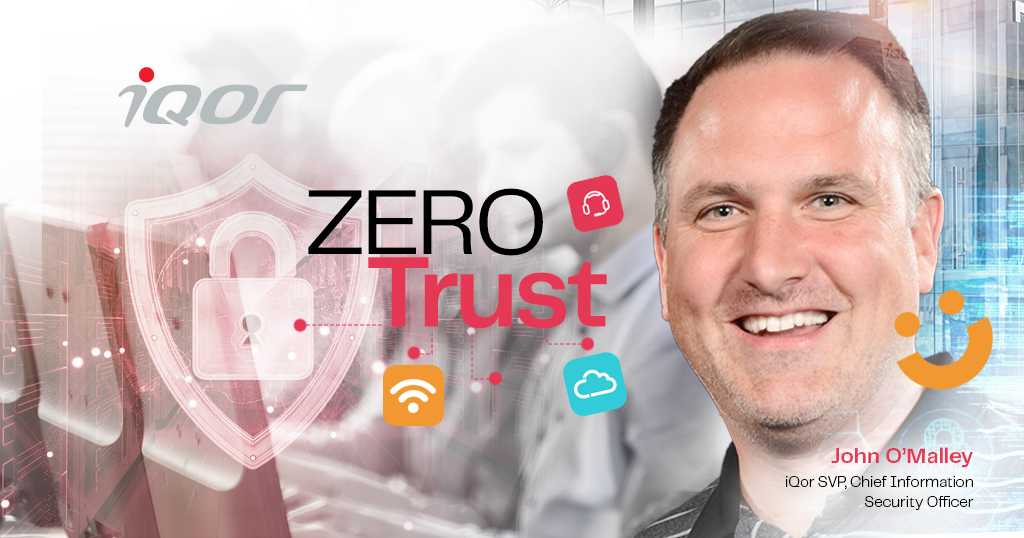
John O’Malley is SVP, Chief Information Security Officer at iQor. Connect with John on LinkedIn.
This nonprofit health benefits company is focused on improving the health and lives of its one million members. It is nationally recognized in the United States as a leader for quality, customer service, transparency, and product innovation. As the fastest-growing healthcare plan in the state in which it operates, it is accepted by the majority of hospitals and primary care providers in its state. The healthcare company is committed to the community and focused on low overhead, cost savings, and personalized support, while offering a broad range of individual, family, small business, and large group plans. They also provide services to Medicare beneficiaries, placing a high priority on ensuring senior citizens receive responsive customer service that yields consistently high customer satisfaction rates.
The Challenge
The state health plan is committed to providing excellent customer service. Their internal agents deliver inbound and outbound customer care to the plan’s one million members. Determined to reach their average speed of answer (ASA) goals, they found they needed additional support to meet seasonal open enrollment demands and to help elderly Medicare customers get back on track when facing hardships.
They needed more cost-effective solutions to be able to ramp effectively with sufficient staffing levels of full-time employees (FTEs) during open enrollment. They also needed to ensure these employees were trained quickly and effectively with in-depth knowledge to provide personalized care to customers from a wide variety of backgrounds in an empathetic, understanding way.
Additionally, they sought support for accounts receivable management (ARM) and for providing friendly reminders and solutions to help elderly customers retain their Medicare services when in the midst of hardship. The focus was on keeping customers satisfied and providing compassionate service responsive to their needs.
All in all, the company is in it for the long haul—they want to keep their customers for life and they know that hinges on providing excellent customer experiences with 100% satisfaction rates.
The Solution
iQor began working with the healthcare benefits company in 2012 with a team dedicated to providing empathetic outbound accounts receivable management support to help Medicare customers get back on track. The demographics of the customer service agents differed significantly from those of the customers they served. In order to provide the best customer service experiences, the agents needed to understand their customers’ needs. To this end, the iQor team proactively developed a multifaceted program to help agents understand and connect with older customers.
This approach yielded great success. After piloting outbound customer support for a year and consistently exceeding the healthcare benefits company’s expectations, iQor gained their trust as a valued partner in their customer service offerings. As a result, iQor transitioned to providing inbound customer support at a steady state and supporting seasonal ramps. This was the first time the healthcare benefits company had outsourced inbound customer service; iQor remains their only business process outsourcing (BPO) partner to this day. iQor provides inbound customer care on multiple lines of business with a steady state of FTEs that increases to more than 100 during open enrollment.
Implemented In-Depth Training
iQor created an intensive six-week training program to develop agents, focusing on complex content knowledge, compliance, and empathetic and personalized service. iQor excelled at training agents not only for steady state service needs, but also for peak-season ramps that required training more than 5x the number of agents so they could become experts. iQor exceeded the healthcare benefits company’s requirements for performance and did so at a lower cost than they could provide internally.
Established Frequent and Open Communication With the Client
Weekly and bi-weekly meetings with the healthcare benefits company provided an ongoing detailed analysis of operations, goals, and achievements. These meetings solidified iQor as a trusted partner in the healthcare benefits company’s success.
Created a Unique Community Outreach Program
In line with iQorian Values focused on giving back to the community and a commitment to truly understanding customer needs, iQor’s program leadership reached out to local nursing homes and senior centers so customer service teams could build relationships with members of the community and better understand their needs. Teams regularly participated in resident programs such as bingo, seasonal activities, dances, arts and crafts, and more. These partnerships heightened agent awareness of circumstances customers may be encountering and created opportunities for staff to learn firsthand about consumer struggles and needs. These activities built empathy and patience, showing agents why, for example, it may take longer to handle a customer call—plus they created long-lasting bonds for both parties.
Shifted the Customer Interaction Focus Away From Being Time-Sensitive and Toward Building Caring Relationships
Because of the elderly customer demographic, KPIs like average handle time (AHT) were less important. Instead, customer service agents needed to talk to the consumer slowly and perhaps loudly so they could fully understand and appreciate the service and solutions being provided. Agents learned to take their time with customers, in part because they may be the only person the customer talks to that day. Program agents were also trained to understand the individual and unique challenges many of the consumers may be facing, including heart conditions or arthritis that could impact the speed of their interactions or how challenging it may be to hold the phone or write notes.
Implemented a Focus on True, Meaningful Customer Service and Compliance
The iQor team covered all angles of training and ongoing coaching to ensure agents were equipped to provide personalized, empathetic service to a niche customer base. The teams also placed a high level of importance on compliance, ensuring all endpoint security measures, training, government regulations, and healthcare guidelines were followed.
The Results
iQor implemented a budget-friendly, results-focused customer-care solution that included weekly and bi-weekly touch-bases with the client. The iQor team worked closely with the healthcare benefits company to ensure high levels of customer satisfaction and to establish procedures for following up with customers that may need additional support.
iQor’s actions resulted in improved scores that met and exceeded operational goals. The KPIs for the different lines of business reflect differing results based on the needs of the customers for each program.
Expanded Engagements With Nearly Identical AHT
Total call volume jumped 45% from 40,000 to 58,000 while AHT stayed nearly constant, demonstrating consistent support.
Exceeded Medicare Quality Score Goals
The program team generated a 1% improvement in the Medicare Quality Score.
Excelled at High Quality Ratings
The team supporting the individual plan surpassed the quality experience goal by 7% and the quality technical goal by 8%.
While the metrics matter, there’s one true measure of overall success: client and customer satisfaction. iQor has provided exceptional service and earned its place as a loyal and trusted partner of the healthcare benefits client for more than a decade. iQor teams are truly committed to providing exceptional service that makes employees and customers smile.
Self-Service Support Solutions for Superior Customer Service
In today’s digital world, a key component of customer engagement hinges on fast, accurate, and readily available solutions for customers. According to Salesforce Research, 63% of consumers expect companies to know their unique expectations and needs. Our digital age necessitates instant access to information, meaning customers increasingly want digital-first conveniences for more personalized and empathetic experiences immediately without wait times or obstacles in their way. These expectations from today’s consumers require companies to innovate and provide quick, accurate responses across channels to sustain a competitive edge, maintain customer satisfaction, and improve brand loyalty. This need for instant 24/7/365 support has the potential to overwhelm employees and lead to decreased employee engagement but can also serve as an opportunity for companies to adapt and better meet the needs of their customers and staff. Self-service support solutions offer convenience—giving consumers access to rewarding customer experiences while on the go and freeing up agents to address more complex inquiries.
As a managed services provider of customer engagement and technology-enabled business process outsourcing (BPO) solutions, iQor creates self-service support capabilities on behalf of our clients. In this post, we share our expertise and best practices for incorporating customer self-service options as one element of a comprehensive digital customer experience journey companies can employ as they evolve to meet and exceed customer expectations of today and into the future.
BPOs like iQor employ experts to design self-service solutions that preserve your most precious relationships with customers. Self-service capabilities facilitate online support without ongoing assistance from customer service agents to enable consumers to connect with your brand on their terms. Examples of these self-service options include digital frequently asked questions (FAQs), knowledge bases, online discussion forums, how-to tutorials, and flexible automation features such as intelligent IVRs, chatbots, and access to seamless omnichannel support so customers can escalate their issue with ease if more support is needed. Self-service features enable your customers to work on their own behalf to obtain quick and accurate answers while also allowing frontline employees to focus more time on high-value customer support engagement.
Read on to learn more about the benefits of various types of self-service customer support options iQor can personalize for your brand to create the best customer experiences your industry has to offer.
What Is Self-Service Customer Support?
Self-service customer support represents any activity in which the customer proactively acts on their own behalf without the assistance of a customer service representative. It has become a baseline customer service solution expected by most customers as their first course of action when seeking solutions to questions or concerns. It empowers customers to find answers to their questions through tutorials, FAQs, videos, knowledge bases, conversational AI and other support platforms without the need for a live support agent. These digital transformation self-service solutions typically combine automation of basic tasks like informing a customer of the status of an order, with more advanced answers that customers can access through knowledge bases, forums, videos, and the like. As part of an integrated solution to customer support, self-service options must be optimized for easy access both online and through mobile devices. Businesses don’t have to go it alone. BPOs like iQor provide integrated solutions based on experience and data to offer the most effective and comprehensive self-service approach for your brand.
The Benefits of Self-Service Customer Support
Customer self-service offers a wide range of benefits for customers, companies, and employees alike. They can be scaled and integrated into your omnichannel experience to ensure self-service options align with customers’ needs while delivering seamless interactions across channels to deliver efficient solutions so customers stay connected and engaged.
Optimized customer experience
According to Microsoft, a whopping 90% of Americans consider customer service an important factor when choosing a brand. Customers often prefer feeling empowered to answer their own questions on demand without contacting support. Self-service customer support puts them in control from anywhere, any time of day or night and doesn’t require wait times to speak to an agent.
Increased sales
Self-service solutions may also boost your sales since customers can resolve their own issues 24/7/365, making them less likely to abandon a transaction if they can quickly answer their own question. This positive experience with your brand can improve response rates to your sales offers and may prompt a positive review or recommendation. Data-driven self-service engagement builds brand loyalty through improved customer experiences that create more satisfied customers through consistent outcomes and reduced handle time, increasing Net Promoter Scores (NPS).
On the other hand, when customers only have the option to contact live agents for most inquiries, they can encounter high call wait times, particularly at peak times. This can lead to customer dissatisfaction and increase a company’s call abandonment rate.
Lower operating costs
Self-service options not only provide what customers want, but they enable you to do so for large numbers of customers at a fraction of the cost for live support. Intelligent virtual agents (IVAs) can offer additional solutions when needed while live representatives enjoy more time to focus on assisting customers with complex issues, reducing unnecessary spend. These channel optimization strategies make the customer journey a win-win for your bottom line.
Improved employee morale and productivity
Self-service solutions can also help make your customer service representatives happier and more productive. Research has shown that live agents find as much as 40% of support tickets to be repetitive and mind-numbing. Implementing self-service support options and automated processes helps reduce the repetitive tasks and mundane questions human agents encounter and gives them more time to handle complex situations that require human expertise and compassion. Incorporate self-service options to deliver amazing customer experiences that make frontline employees and customers smile.
Competitive advantage
Finally, self-service solutions can help your brand remain competitive. Statista finds that 88% of consumers in the U.S. and around the world expect an organization to offer online self-service support.
Additionally, Gartner predicts that automated personal technologies will be the default user experience delivery method by 2030. By then, Generation Z—those born between 1995 and 2009—will make up the largest portion of the customer base. More than previous generations, Generation Z digital natives have embraced the flexibility technology offers, choosing what to consume, when, and through what platform. By knowing their customer base and gathering data across channels to use automation where it matters most, brands can design better experiences to promote meaningful customer interactions.
Self-Service Platforms That Work
As one of the world’s largest business process outsourcing companies, iQor specializes in helping businesses assess data-based metrics to better understand customer preferences and needs and develop the most effective self-service options for their brand. The best self-service support strategies often include the following offerings, while also providing integrated resources backed by human support for customers to access with ease if needed. Self-service options that reduce effort and promote positive and accurate results with fast response times make for happy, satisfied customers.
1. Automated chat and messaging support
Intelligent automation customer experience solutions are an essential component of comprehensive self-service support offerings. In fact, 69% of consumers prefer to use chatbots because they deliver quick answers to simple questions. Moreover, utilizing live agents to respond to each individual customer’s digital messages is costly, inefficient, and unrealistic.
To boost your return on investment (ROI), iQor has extensive experience designing, implementing, and managing intelligent automation customer experience solutions that provide cost-effective, efficient means of helping customers self-serve to resolve their own issues. Robotic process automation (RPA) software that uses artificial intelligence (AI) and machine learning to handle high-volume, repetitive, or slow time-consuming tasks reduces human error and enables customer-facing employees to focus on building more rewarding customer experiences. These cost-effective virtual agents that form an integral part of your customer retention strategy include simple and smart chatbots. Although both are able to complete similar tasks, smart IVA chatbots do so with finesse and personalization. Their differences become clearer when we compare how they complete tasks.
Simple chatbots handle basic, routine queries. They are available through live messaging tools and can be trained to follow a script to give fast answers to FAQs. Chatbots can simulate a conversational experience to a certain extent but are ultimately constrained by having to work from a limited script—lacking the ability to make contextual adaptations and learn over time.
Examples of support a simple chatbot can provide:
Generic product recommendations and availability.
Status of returns and exchanges based on inputs from the customer.
How can I reset my password? Provide basic instructions.
Smart chatbots or Intelligent Virtual Agents (IVAs) are more advanced AI-powered chat assistants that communicate with customers through their preferred communication channels via text or text-to-speech. Equipped with natural language processing (NLP) and machine learning, IVAs are able to understand and retain context to have more productive conversations. By combining cognitive computing and analytics, they give customers personalized responses through friendly and humanlike dialogues that align with your brand. Although they can’t resolve complex tasks, they can gather information to refer to later, help human agents interface with customers, and answer simple questions.
Examples of topics an IVA chatbot can assist with:
Personalized product recommendations and availability.
When will my order arrive? What is the tracking number for this order?
Reset passwords—can complete the task for the customer.
Utilizing conversational AI in these ways enables your company to proactively interact with customers through their preferred channels and receive immediate responses at their convenience to drive operational efficiency at scale.
2. Email support
Asking frontline employees to reply to every email can be a taxing and error-prone process. Many emails can easily get lost, particularly after weekends, holidays, and peak seasons.
Integrating automated help desks and ticketing solutions into your workflow can help human agents gather, organize, and track support tickets through a dashboard. Adding rule-based routing to the inquiries can automatically generate a new ticket when a customer’s self-service attempts go unfilled, seamlessly escalating the request to prompt human engagement. The ticket will contain background information with the customer’s name, email address, and the history of their self-service attempt to ensure an integrated and satisfying experience when the customer speaks to a live agent.
3. Online knowledge base
Besides directly interacting with your site through a chatbot or IVA or sending an email, customers often use your website to find answers to their questions. A strong self-service strategy incorporates a well-organized and user-friendly knowledge base to help customers educate themselves on how to use your website, app, or product.
Your knowledge base can include:
How-to guides.
FAQs.
Video tutorials.
Pre-recorded classes and webinars.
Free product trainings.
Step-by-step instructions.
Glossaries.
Troubleshooting instructions.
The knowledge base should be clearly organized and accessible. It should include:
Categories such as “Account Settings” and “How to Use Our App” to facilitate easy navigation to desired content.
A search bar to help customers locate answers instantly, even when they don’t know the overarching category.
Different media such as text, video, audio, and annotated images to accommodate customers’ different learning styles.
Good SEO to make content easily accessible through search engine queries while also boosting your site’s ranking and attracting new customers.
4. Social media support
Although social media moderation is managed by human agents, it enables customers to access your brand’s support on their terms. It equips you to resolve customer concerns quickly and engage with your followers more effectively than would be possible otherwise. With social media moderation like iQor’s, you can maintain accurate information on your social channels for customers to self-serve for essentials like hours of operation, contact information, menus, service descriptions, pictures, and so much more. It facilitates a seamless, branded customer experience through social media channels at scale.
5. Interactive and community-based discussion forums
Another self-service option is an online community or public discussion forum where customers can interact and help each other. Empowering customers who are experts on your products to answer questions in a digital community is a powerful self-service model that builds brand loyalty. These online communities can be hosted on your website or through third-party platforms.
It’s important to monitor and reinforce the discussion forum with a support team or moderators to help guide customers who may not find answers to their questions or who need assistance navigating the community. Like the other self-service solutions on this list, interactive communities and forums should offer a clear option to contact live agents when the self-service tool does not offer solutions to a customer’s particular need.
Requirements for Self-Service Customer Support
An effective self-service customer support strategy gives customers control. It offers fast access to the information they need through intuitive and accessible platforms with clear paths to a live representative or omnichannel support if needed. iQor can help you develop a strategic self-service customer support solution based on your brand, budget, and customer needs.
When developing a personalized self-service approach for your brand we assess a variety of metrics to partner with you to create a solution that brings smiles to you and your customers. If you are going to strengthen your customer support through self-service options, these are some questions to consider.
1. What resources are necessary to implement self-service customer support?
Adding self-service customer support to your business model may necessitate the addition of new resources, some of which include:
Utilizing customer support chatbots and IVAs.
Creating a knowledge base and online community of resources.
Producing videos and blog posts for your knowledge base.
Employing subject matter experts to moderate online communities and help customers help themselves.
After listing the resources needed to implement self-service, consider the impact on your budget. You may find that outsourcing self-service customer support to iQor makes the customer journey a win-win for your bottom line.
2. How many of your consumers currently use customer support channels?
If you have the budget and your customers already use multiple self-service support channels (e.g., email, online chat, existing knowledge base articles, etc.), you are ready to consider implementing self-service options. Seize the opportunity to stand out from your competitors. Provide memorable and optimized customer experiences through unique self-service channels personalized for your brand.
3. How will self-service support impact live customer service representatives?
The primary goal of self-service support is to meet the demands of the modern customer who expects to have access to support through digital methods 24/7/365. iQor can help you meet these expectations while realizing the benefits of providing the quality experiences customers seek and reducing your costs for customer care. It’s our business to set up and manage integrated customer support experiences so you don’t have to create new processes, utilize new resources or train frontline staff.
Experience the iQor Difference
This post provides insights into self-service customer support and its role in providing a great customer experience. Many customers’ first course of action is to turn to a digital tool to search for their own solution before reaching out to a live agent. Brands must meet customers on their digital platforms of choice with the information they seek. With the expanding role of digital in the customer experience regardless of age, this model of support is going to prove invaluable in the years to come.
iQor is ideally suited to help brands create amazing customer experiences through these and other support options. iQor provides a comprehensive suite of full-service and self-service scalable offerings that are purpose-built to deliver enterprise-quality CX.
Our award-winning CX services include:
A global presence with 40+ contact centers across 10 countries.
A CX private cloud that maximizes performance and scales rapidly across multiple geographies on short notice.
A partnership approach where we deploy agents and C-level executives to help maximize your ROI.
The perfect blend of intelligent automation for scale and performance coupled with an irresistible culture comprised of people who love to delight your customers.
Virtual and hybrid customer support options to connect with customers seamlessly, when and where they want.
The ability to launch a customer support program quickly, even when you need thousands of agents ready to support your customers.
iQor helps brands deliver the world’s most sought-after customer experiences. Interested in learning more about the iQor difference? If you’re ready to start a conversation with a customer experience expert, contact us directly to learn more about how we can help you create more smiles.
As the world becomes increasingly digitized, many forward-looking businesses have started deploying intelligent virtual agents (IVAs) in their customer service delivery model. iQor has extensive experience designing, implementing and managing intelligent automation customer experience solutions for brands. We’re sharing our expertise and best practices on IVAs in this post.
IVAs are artificial intelligence (AI)-powered chat assistants that give customers personalized responses by combining cognitive computing and analytics. Unlike chatbots, which follow a given script, IVAs start humanlike, context-based dialogues to reach out to customers. For instance, if a customer enters an order number and asks a question about the order, the IVA will save this information so it can refer to it later in the conversation.
IVAs offer many benefits. They’re cost-effective, efficient, and they form an integral part of your customer retention strategy. IVAs can also help human agents interface with customers and improve customer service and loyalty. Additionally, they can be integrated with human agents through Customer Experience as a Service (CXaaS), a cloud-based solution that empowers organizations to deliver a cost-effective and hyper-personalized customer experience.
Read on to learn more about how IVAs work, how they can improve customer service, and how you can start integrating IVAs with human agents.
How an Intelligent Virtual Agent Works
An intelligent virtual agent is an AI virtual assistant that leverages various AI technologies to understand customers’ concerns. Using natural language processing (NLP) technologies, IVAs can understand answers that they haven’t been explicitly programmed to understand. That’s because NLP technologies — which include natural language understanding (NLU), text-to-speech, transcription, and speech-to-text — enable IVAs to find insights and meanings in spoken and written conversations. They also empower IVAs to understand the meaning of conversations without a predefined syntax and build their knowledge base.
Deep learning, speech recognition, and machine learning also help IVAs build up a large vocabulary, understand different accents and colloquialisms, and provide correct and accurate answers to customers.
Because they’re powered by so many different types of advanced AI technologies, IVAs can understand:
Free text
Speech
Multiple-choice selection of answers
What IVAs are used for
IVAs are used to answer and resolve simple customer requests. They come in two forms:
Messenger apps: This form is the most common. It’s the chat box that pops up at the bottom of your screen when you land on a website.
Virtual customer service agents: These IVAs give interactive voice responses during customer calls.
Reducing wait times for calls. Without IVAs, your call volumes can get increasingly high, which will lead to call abandonment and frustration for your customer. Some customers may even give up on your brand due to long wait times. To prevent customers from abandoning and get them to continue interacting with your company, you could deploy IVAs to engage with them. Giving people instant answers and possible solutions will significantly improve the customer experience.
Automating repetitive tasks that don’t require human ingenuity. IVAs can deal with routine tasks and inquiries to give human chat agents more time and energy to deal with more pressing issues. This frees up more time and resources for agents to address customer questions and concerns that require more effort to answer and resolve. In other words, IVAs accelerate workflows.
Acting as assistants for agents. If an IVA can’t resolve an issue, it can gather key information from customers and pass that along to human agents.
Ways That IVAs Help Human Agents Interface With Customers
Although IVAs can do a lot of the things that human agents can, they don’t replace human agents. There are still a number of things that only human agents can do. These include resolving complex issues that require empathy and compassion. In such scenarios, IVAs act as assistants for human agents and help human agents become augmented agents.
Here are some ways IVAs can help human agents become better ambassadors for your brand:
Keep human agents in the loop: As mentioned above, an IVA can gather and pass vital customer information on to live agents. For example, if a customer wants to talk to a human agent about a warranty on her laptop, she can leave her order number with the IVA. The IVA will then pass the order number and a summary of her concern on to a human agent who has the skills, empathy, and compassion to help the customer understand her warranty better.
Show human agents key metrics: Unlike chatbots and virtual assistants (VAs), IVAs have access to an entire ecosystem of software, services, data, and products. They also understand how these parts interact and how customers have interacted with them so far, thanks to machine and deep learning. This means human agents can use IVAs to:
Get a better and more accurate understanding of how customers have been interacting with the business so far
Develop a strategy to attract and retain clients based on existing statistics
How Intelligent Virtual Agents Improve Customer Service and Loyalty
IVAs can also improve customer service and loyalty.
Due to their conversational AI capabilities, IVAs can attract and retain customers by creating positive, helpful experiences that stick in people’s minds. Think about that helpful store employee, museum guide, or IT professional who wants to guide customers to more resources. IVAs are like that, only they can work 24/7.
By creating these memorable experiences for customers, IVAs can help you improve your service design. Service design is based on the simple idea that customer service excellence is the most important concern when delivering a service or product. By putting your customers’ concerns and feelings at the forefront, you’ll be able to offer value and promote your brand every time you interact with customers.
Integrating IVAs With Human Agents for CXaaS
Another way you can use IVAs to your advantage is to integrate them with human agents for CXaaS.
CXaaS is a cloud-based holistic solution for the design, planning, and implementation of activities that make up the customer experience. Specialty service providers such as iQor specialize in managing such cloud-based solutions for brands at scale. CXaaS solutions combine automation with customer experience (CX) strategy and data integration. In other words, CXaaS is the backbone of digital transformation. It’s not just a patchwork of the newest technologies — it’s also a foundational shift to digital. CXaaS deconstructs and re-imagines CX to ensure customer satisfaction.
What makes CXaaS special?
CXaaS leverages AI technology and massive amounts of customer data to give you a deeper understanding of customers’ specific needs in real-time by providing analytics to gather and analyze customer data, automating simple employee and customer tasks, and segmenting customers to give them personalized experiences. It also helps you create a CX roadmap that smooths out the customer journey and helps you initiate tools like automated IVAs, customer self-service apps, and proactive alerts to improve CX and customer engagement.
CXaaS also makes your brand future-proof. After you’ve created a CX roadmap and enhanced customer interaction and engagement by using CXaaS’ actionable insights, you can use CXaaS tools to expand your brand to other customer channels.
How does CXaaS work?
CXaaS comes with critical components for intelligent virtual assistants that you can integrate with human agents:
Online engagement: CXaaS lets your IVAs respond to customers immediately through text or text-to-speech. This allows you to keep your customers engaged, even if you can’t solve their problems immediately.
Personalized services: CXaaS tools let you and your agents create hyperpersonalized experiences for different types of customers. This will make customers feel cared for, so they’ll be more likely to visit your site again.
Cloud computing: Cloud computing makes everything more flexible and accessible. Instead of working from contact centers, your live agents can work from home and use screen sharing, Google Docs, and other cloud-based apps to communicate with customers.
Detailed metrics: CXaaS solutions come with detailed messaging and voice analytics to gather insights for improvement. Your human agents can access these metrics to determine:
Ways to improve CX
Prevent bad CX from happening again
Make adjustments to IVAs if they aren’t getting the results you want
Creative omnichannel experiences: CXaaS will help your IVAs and live agents reach your customers on the channels and platforms they use the most, whether it be Facebook, LinkedIn, Instagram, Twitter, or WhatsApp.
Experience the iQor Difference Today
All in all, intelligent chatbots like IVAs are a future-proof, cost-effective part of your digital customer experience strategy. IVAs can help your brand compete and stand out among your competitors and ultimately build more loyalty. Powerful, streamlined, and intuitive, IVAs can be used alone, with human agents, or as part of a full-suite CXaaS solution.
If you’re interested in improving your brand’s customer experience, consider working with iQor. We help brands deliver the world’s most sought-after customer experiences. We offer the following:
A diversified technological suite that maximizes and scales performance across multiple geographies.
A secure private cloud platform that extends the call center experience into remote agents’ homes. This lowers costs while boosting customer satisfaction and agent loyalty.
Work-from-home solutions that blend IVAs with on-site and remote agents.
A partnership approach. Besides our agents, our Business Development Executives, C-Level Executives and Data Scientists will work with you to provide a consultative partnership focused on your success.
Interested in learning more about the iQor difference? Learn more by listening to our podcasts. If you’re ready to start a conversation with a customer experience expert, you can contact us directly to learn more about how we can help you create more smiles.